Winterizing Without Heat Lamps: The Physics of Passive Ventilation and Deep Litter
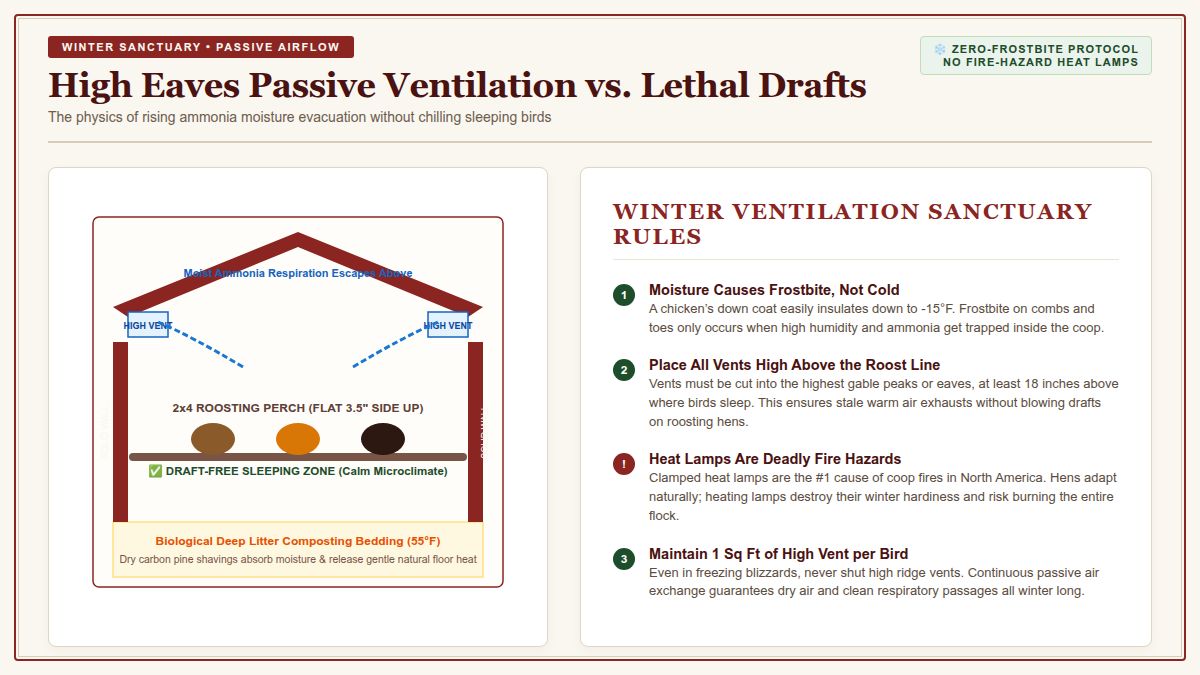
When temperatures plummet below zero degrees Fahrenheit, well-meaning chicken keepers rush to farm supply stores to purchase red 250-watt clamp-on heat lamps. This single decision causes hundreds of devastating coop fires every winter across North America. Hens bumping into suspended lamps, dry pine shavings catching fire, or dust igniting on hot bulbs destroys flocks and homestead outbuildings within minutes.
Chickens are biologically insulated walking down jackets. A healthy adult hen has a normal internal body temperature between 105°F and 107°F. What harms chickens in winter is not dry, cold air — it is trapped humidity and ammonia vapor. When hens exhale and deposit wet droppings overnight, moisture rises. In an unventilated coop, this moisture condenses on comb tips and wattles, freezing solid and causing agonizing tissue necrosis (frostbite).
Step 1: High Eaves Ventilation (Above the Roost Line)
The key to winter coop architecture is understanding the difference between a draft and ventilation:
- A Draft: Cold wind blowing directly across the birds' bodies at perch level, ruffling their feathers and stripping away their trapped body heat. Drafts must be eliminated by sealing lower wall seams.
- Ventilation: Continuous air exchange happening well above their heads at the roofline. Warm, humid air naturally rises via the stack effect and exhausts out high soffit vents, pulling in fresh, dry oxygen.
Provide at least 1 square foot of open, hardware-cloth-covered ventilation per hen at the highest point of the roof ridge or gable ends, never closing it even during blizzard conditions.
Step 2: Deep Litter Method (In-Floor Geothermal Warming)
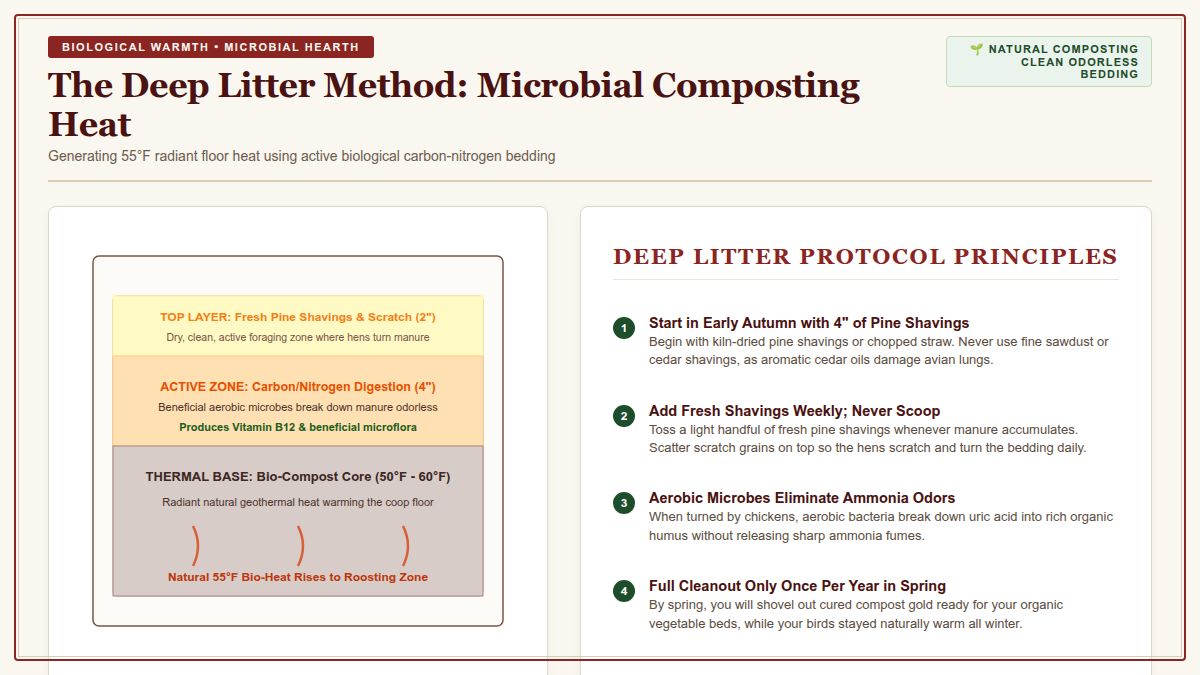
Instead of scraping out droppings every week, successful northern homesteaders employ the traditional deep litter method:
- Start in early autumn with 4 inches of kiln-dried pine shavings or chopped autumn leaves.
- As droppings accumulate under the roosts, toss a small handful of scratch grains or cracked corn onto the bedding daily.
- The hens vigorously scratch and turn the manure into the carbon shavings, aerating the pile like a compost tumbler.
- Add a fresh 2-inch layer of clean shavings every few weeks as the bed deepens to 8 to 10 inches by mid-winter.
- Microbial decomposition at the base layer creates slow, steady heat (frequently maintaining 55°F at floor level) and produces beneficial microbes that prevent respiratory bacterial blooms. In spring, you shovel out rich, finished compost for your organic garden.
Heritage Dual-Purpose Breeds: Egg Production & Cold Hardiness Index
Flock Sanctuary Space, Roosting Perch & Nesting Box Estimator
Give your birds the space they need to thrive in calm harmony. Calculate essential indoor shelter square footage, open pasture run dimensions, frost-protective flat roosting perches, and private, dark nesting boxes.