Heritage Dual-Purpose Breeds: Egg Production, Longevity & Winter Hardiness
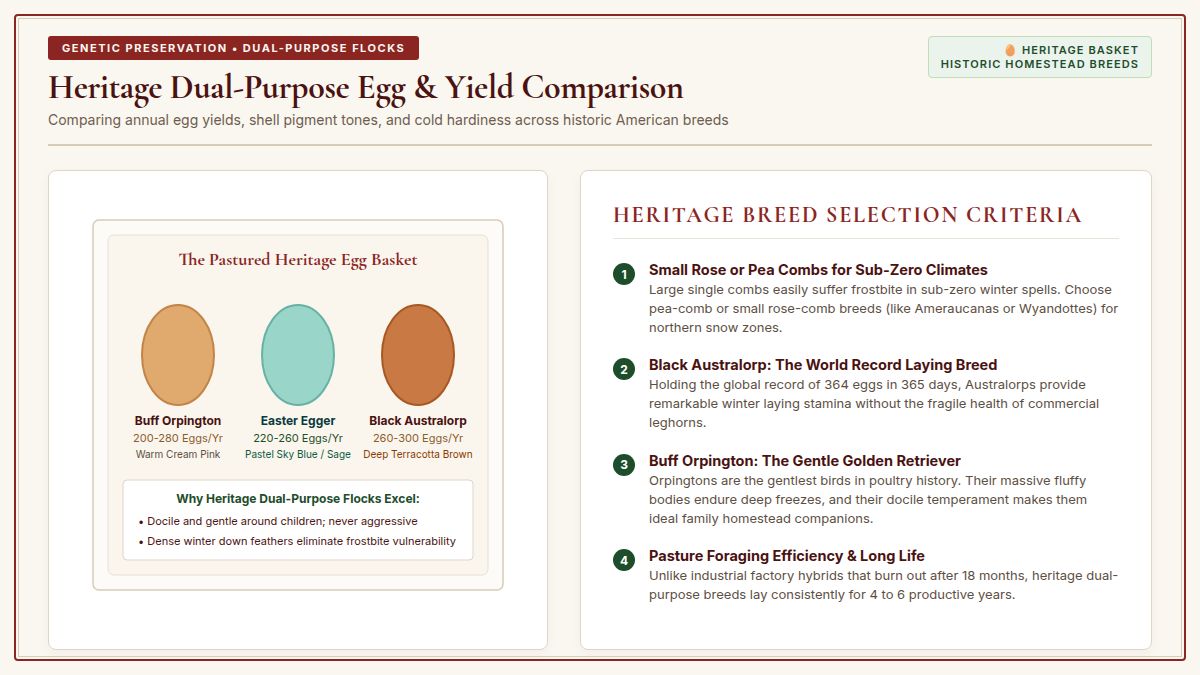
Commercial battery hybrids like the ISA Brown or White Leghorn are bred for explosive, unsustainable egg production — churning out 330 eggs in their first 14 months before burning out with reproductive cancer and prolapse. For the family homestead and self-reliant backyard coop, these fragile industrial birds are the wrong choice.
True heritage dual-purpose breeds — developed in the 19th and early 20th centuries — provide steady egg production for 4 to 6 years, thrive on pasture forage, possess calm family-friendly temperaments, and dress out as substantial tabletop roasters when retired.
The Top 3 Homestead Heritage Breeds
When building a resilient 6-hen flock, these three cornerstone breeds balance high egg volume with docile behavior:
- Buff Orpington: Massive, heavily-feathered English heritage birds. They produce 200 to 280 large brown eggs per year, never fight or bully smaller flockmates, and love being handled by young children.
- Black Australorp: The Australian refinement of the Orpington. An Australorp hen holds the world record for laying 364 eggs in 365 days under natural lighting. Highly efficient feed-to-egg converters.
- Plymouth Barred Rock: The definitive historic American homesteader breed. Recognizable by crisp black-and-white zebra striping, they produce 250 to 300 eggs and maintain consistent laying straight through December and January cold spells.
Coop Density & Nesting Box Architecture
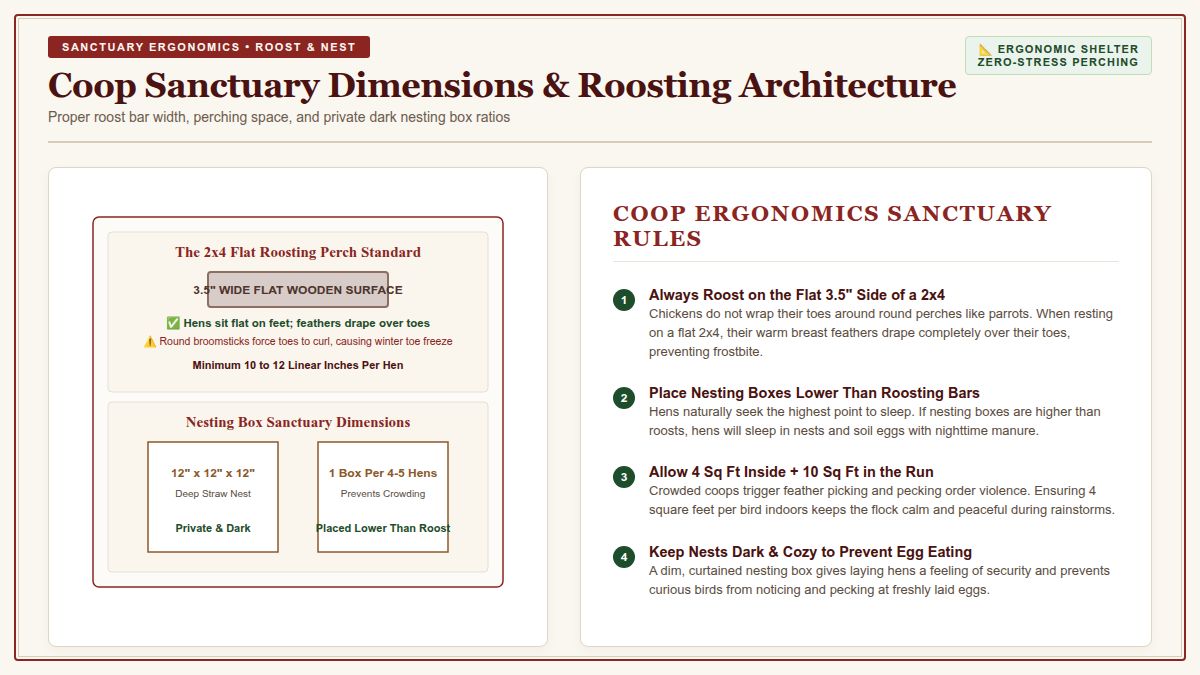
Heavy heritage dual-purpose birds require more physical space than miniature bantams. If you crowd heavy 8-pound Orpingtons into tiny prefabricated mail-order coops (which are notoriously overrated by manufacturers), boredom and confined stress trigger feather-picking, cannibalism, and broken eggs in the nest boxes.
Maintain these strict physical minimums:
- Indoor Floor Space: 4 square feet per bird minimum (4.5 sq ft for heavy Orpingtons).
- Outdoor Run: 10 square feet per bird minimum.
- Roosting Perch: 12 linear inches per bird on a 2x4 lumber rail mounted with the 4-inch wide side facing upward.
- Nesting Box Ratio: 1 dark, private 12x12-inch box for every 4 laying hens.
Predator-Proofing the Backyard Coop: 1/2-Inch Hardware Cloth vs. Chicken Wire
Flock Sanctuary Space, Roosting Perch & Nesting Box Estimator
Give your birds the space they need to thrive in calm harmony. Calculate essential indoor shelter square footage, open pasture run dimensions, frost-protective flat roosting perches, and private, dark nesting boxes.